Hot Air Balloon Cappadocia Turkey 2026
📋 Table of Contents
- 1. Introduction: Why Cappadocia is Ballooning Paradise
- 2. The Geological Wonderland: Fairy Chimneys & Volcanic Landscapes
- 3. Best Time to Fly: Seasonal Guide & Weather Patterns
- 4. The Complete Balloon Experience: What to Expect
- 5. Safety Standards & Regulations (SHGM)
- 6. Pricing Guide 2026: What You'll Pay
- 7. Choosing Your Balloon Operator
- 8. Photography Tips: Capturing the Magic
- 9. How to Prepare: Clothing, Health & Practical Tips
- 10. Booking Your Flight: Step-by-Step Guide
- 11. Frequently Asked Questions
- 12. Conclusion: A Once-in-a-Lifetime Experience
1. Introduction: Why Cappadocia is Ballooning Paradise
Imagine floating silently over a landscape that seems borrowed from another planet. As the sun peeks over the horizon, painting the sky in hues of gold, pink, and purple, you drift above hundreds of other colorful balloons suspended in the morning air. Below you, a surreal terrain of towering rock formations, ancient cave dwellings, and winding valleys unfolds like a magnificent tapestry. This is not a dream—this is Cappadocia, Turkey, the undisputed hot air balloon capital of the world.
Located in the heart of Central Anatolia, Cappadocia has become synonymous with hot air ballooning, attracting over 600,000 passengers annually who come to experience what many consider the ultimate bucket-list adventure. The region's unique combination of stable weather conditions, otherworldly geological formations, and world-class safety standards has created the perfect environment for ballooning excellence.
But what exactly makes Cappadocia so special for hot air balloon flights? Why do travelers from every corner of the globe flock to this relatively small region in Turkey? And most importantly, how can you ensure that your Cappadocia balloon experience becomes one of the most memorable moments of your life?
In this comprehensive guide, we'll explore every aspect of hot air ballooning in Cappadocia—from the ancient geological forces that created this magical landscape to the modern safety regulations that keep passengers secure. Whether you're a first-time flyer anxious about the experience or a seasoned traveler looking for insider tips, this guide will prepare you for an unforgettable journey through the skies of Cappadocia.
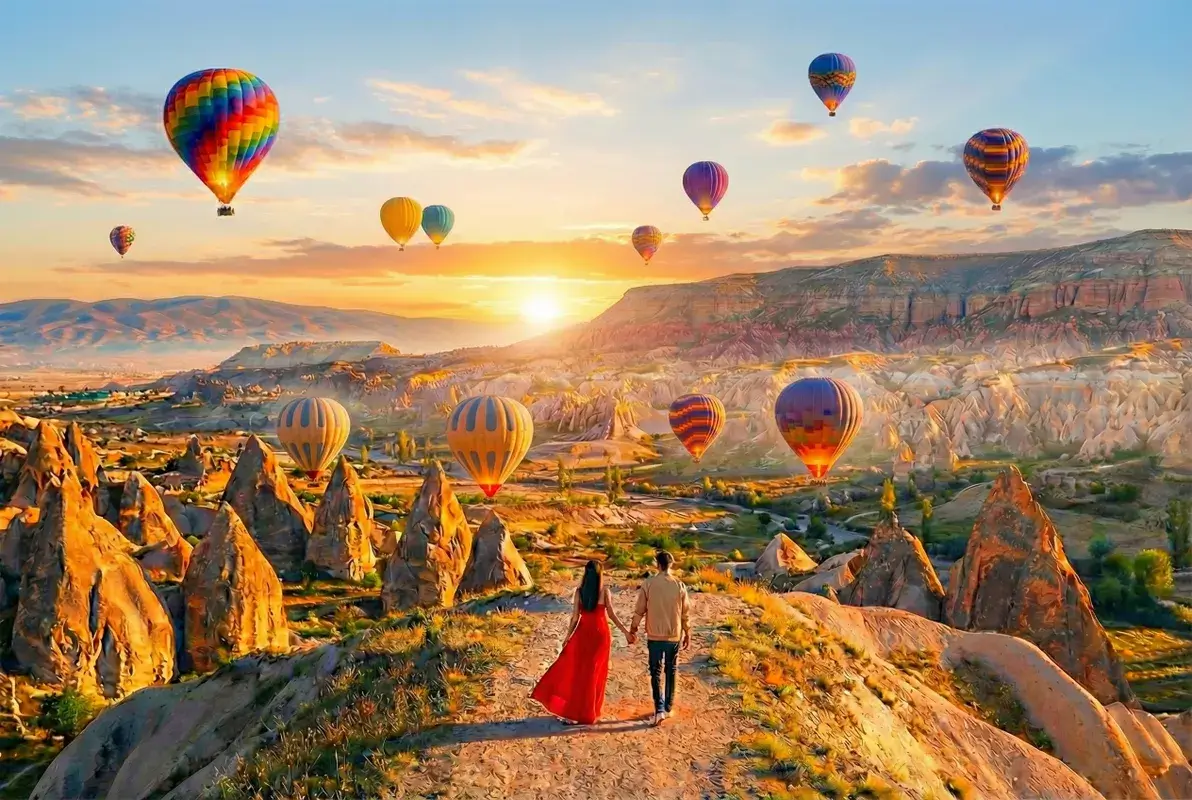
Hundreds of balloons take flight simultaneously over Cappadocia's unique landscape, creating the world's most spectacular ballooning scene.
2. The Geological Wonderland: Fairy Chimneys & Volcanic Landscapes
The Volcanic Origins
To truly appreciate the magic of ballooning over Cappadocia, one must understand the extraordinary geological history that shaped this landscape. Millions of years ago, during the late Miocene to Pliocene epochs (approximately 11 to 2 million years ago), three massive volcanoes dominated the region: Mount Erciyes (3,917 meters), Mount Hasan (3,253 meters), and Göllü Dağ. These volcanic giants erupted repeatedly over millions of years, spewing forth thick layers of volcanic ash, pumice, and lava that blanketed the entire region.
The volcanic material deposited during these eruptions eventually compacted and cemented into a soft, porous rock known as "tuff." This tuff formation, particularly the Kavak and Tahar members of the Ürgüp Formation, reaches thicknesses of 80-100 meters in some areas and forms the foundation of Cappadocia's unique landscape. The chemical composition of these tuffs, rich in volcanic glass and minerals, made them particularly susceptible to erosion while also providing the structural integrity needed to form the region's famous rock formations.
The Birth of Fairy Chimneys
The iconic "fairy chimneys" (Peri Bacaları in Turkish) that make Cappadocia famous are the result of millions of years of erosion acting upon these volcanic deposits. These formations typically consist of three distinct parts: a hard, resistant cap stone (usually composed of basalt or andesite), a narrower neck, and a wider supporting body. The cap stones, being more resistant to weathering, protect the softer tuff beneath from erosion, creating the distinctive mushroom or cone shapes that dot the landscape.
According to geological research, the formation process involves both physical and chemical weathering. Rainwater, slightly acidic from atmospheric carbon dioxide, dissolves the calcium carbonate cementing the tuff particles together. Wind erosion, particularly strong in the Anatolian plateau, scours the exposed surfaces. Temperature fluctuations cause expansion and contraction of the rock, leading to cracking and fragmentation. Over millennia, these forces sculpt the landscape into the fantastical shapes we see today.
The fairy chimneys vary dramatically in size, from small cones just a few meters tall to towering spires reaching 40 meters or more in height. The largest concentrations can be found in the Paşabağ Valley (also known as Monk's Valley), where multiple chimneys cluster together creating an almost surreal forest of stone. The Love Valley and Devrent Valley offer equally spectacular formations, each with their own unique characteristics.
Underground Cities and Cave Dwellings
Beyond the surface formations, Cappadocia's soft tuff enabled ancient civilizations to carve elaborate underground cities and cave dwellings directly into the rock. The most famous of these, Derinkuyu and Kaymaklı, extend hundreds of meters underground and could shelter thousands of people. During the Byzantine period, monks and early Christians carved hundreds of churches and monasteries into the cliff faces, many adorned with remarkably preserved frescoes.
From a balloon basket, passengers witness this rich tapestry of natural and human history spread across the valleys. The Göreme Open Air Museum, a UNESCO World Heritage site, is particularly striking from above, with its cluster of rock-cut churches and monastic complexes. The ancient fortress of Uçhisar, carved into the highest point in Cappadocia, provides a dramatic landmark visible from miles away.
🎈 Balloon Pilot Perspective
"Flying in Cappadocia is like piloting through a geological museum. Every valley tells a different story—some valleys have sharp, angular formations while others have smooth, rounded shapes. The wind determines our path each morning, making every flight completely unique. I've flown here over 3,000 times, and I'm still discovering new perspectives." — Captain Kaan, Royal Balloon, 15 years experience
3. Best Time to Fly: Seasonal Guide & Weather Patterns
Understanding Cappadocia's Climate
Cappadocia experiences a continental climate characterized by hot, dry summers and cold, snowy winters. Located at an average elevation of 1,100 meters above sea level on the Anatolian plateau, the region sees significant temperature variations between day and night, as well as between seasons. This climate directly impacts balloon flight operations, making timing crucial for prospective passengers.
The most critical factor for balloon flights is wind conditions. Hot air balloons can only fly in calm weather, ideally with wind speeds between 5-10 km/h at surface level and no more than 15-20 km/h at altitude. The Turkish Civil Aviation Authority (SHGM) strictly enforces these limits, canceling flights when conditions exceed safe parameters. Understanding seasonal weather patterns helps maximize your chances of a successful flight.
Spring (March-May): Awakening Landscapes
Spring marks the beginning of the primary ballooning season in Cappadocia. March can still be unpredictable, with occasional snow and cancellation rates around 49%. However, by April, the weather stabilizes considerably, with cancellation rates dropping to 42%. May is particularly favorable, with only 26% of flights canceled and the landscape bursting into bloom.
April temperatures range from 5-18°C, requiring layered clothing for morning flights. By May, temperatures rise to 10-24°C, creating pleasant conditions both in the air and on the ground. The valleys come alive with wildflowers, adding splashes of color to the already spectacular scenery. Spring offers an excellent balance between good flying conditions and moderate tourist crowds, though prices begin to rise as peak season approaches.
Summer (June-August): Peak Reliability
Summer provides the most reliable flying conditions of the year. August stands out as the absolute best month, with an astonishingly low 7% cancellation rate—meaning 93% of scheduled flights operate successfully. June and July also perform excellently, with cancellation rates of 20% and 23% respectively. The stable high-pressure systems that dominate the region during summer create consistently calm morning conditions ideal for ballooning.
However, summer comes with trade-offs. Temperatures can reach 30-35°C during the day, though morning flight times (typically 5:00-6:00 AM) remain pleasantly cool at 15-20°C. This is peak tourist season, meaning higher prices (€200-€300+ per person) and more crowded skies. The advantage of up to 154 balloons flying simultaneously creates spectacular visual density, but also means booking well in advance is essential.
Autumn (September-October): The Golden Season
Many experienced travelers and locals consider autumn the best overall time for Cappadocia ballooning. September offers excellent flying conditions with only 14% cancellations, while October maintains strong reliability at 17%. The intense summer heat begins to moderate, with September temperatures ranging 12-26°C and October 8-20°C.
The autumn light creates spectacular photography conditions, with the low-angle sun casting long shadows across the valleys. The vineyards surrounding the region turn golden, adding warm tones to the landscape. September and October also host the Cappadocia Hot Air Balloon Festival, attracting special-shaped balloons from around the world and creating an even more magical atmosphere. While prices remain high (€250-€300), the combination of reliable weather, beautiful scenery, and cultural events makes autumn a premium choice.
Winter (November-February): Magical but Risky
Winter transforms Cappadocia into a wonderland of snow-covered fairy chimneys and frost-covered valleys. The visual spectacle of balloons floating over white landscapes is genuinely unique and unforgettable. However, winter comes with significantly higher risks—January sees cancellation rates of 71%, February 50%, and December 55%. Only the most flexible travelers should attempt winter ballooning.
The challenges include strong winds, snowstorms, and temperatures that can drop to -10°C or lower. Morning pickups may be delayed until 6:30-7:00 AM as sunrise occurs later. On the positive side, winter offers the lowest prices (€100-€150 per person), minimal crowds, and when flights do operate, the experience is extraordinary. Success requires staying in Cappadocia for at least 3-4 days to allow for weather-related rescheduling.
| Month | Cancellation Rate | Avg. Temperature | Price Range | Recommendation |
|---|---|---|---|---|
| January | 71% | -5 to 5°C | €100-€130 | High Risk |
| February | 50% | -3 to 8°C | €80-€110 | Moderate Risk |
| March | 49% | 2 to 13°C | €110-€140 | Improving |
| April | 42% | 5 to 18°C | €150-€190 | Good |
| May | 26% | 10 to 24°C | €200-€250 | Excellent |
| June | 20% | 15 to 28°C | €200-€260 | Excellent |
| July | 23% | 18 to 32°C | €200-€280 | Excellent |
| August | 7% | 18 to 33°C | €220-€300 | Best Month |
| September | 14% | 12 to 26°C | €250-€320 | Best Overall |
| October | 17% | 8 to 20°C | €240-€310 | Excellent |
| November | 50% | 3 to 13°C | €180-€240 | Moderate Risk |
| December | 55% | -2 to 7°C | €130-€170 | High Risk |
4. The Complete Balloon Experience: What to Expect
Pre-Dawn: The Journey Begins
Your Cappadocia balloon adventure begins long before sunrise. Depending on the season, hotel pickup occurs between 3:30 AM and 6:00 AM. While this early start may seem daunting, the anticipation of what awaits makes the wake-up worthwhile. Mini-buses or luxury coaches collect passengers from hotels across the region, creating a shared atmosphere of excitement among sleepy but eager travelers.
The drive to the launch site takes 20-40 minutes, depending on your hotel location and which valley has been selected for takeoff. During this time, the sky gradually transitions from deep black to deep blue, offering the first hints of the approaching dawn. Your driver may provide updates on weather conditions, though the final decision typically isn't made until arrival at the launch site.
The Launch Site: Where Magic Happens
Arriving at the launch site in darkness, you'll witness one of the most spectacular pre-flight scenes in aviation. Massive balloon envelopes lie spread across the ground like colorful giants sleeping in the fields. Powerful fans roar to life, inflating the balloons with cold air until they begin to take shape. Then, with a thunderous whoosh, the burners ignite, shooting flames 3-4 meters into the balloon interiors, heating the air and bringing the massive craft to life.
Most operators provide a light breakfast during this preparation phase—typically consisting of pastries, fruit, coffee, tea, and juice. While not elaborate, this sustenance is welcome given the early hour. More importantly, it provides time to absorb the atmosphere and watch the incredible inflation process up close. The ground crew, trained professionals who work with practiced efficiency, manage the complex process of preparing multiple balloons simultaneously.
Boarding and Takeoff
Once your balloon is fully inflated and vertical, the pilot conducts a safety briefing covering the landing position and basic safety procedures. The basket, typically divided into 4-8 compartments holding 4-5 passengers each, requires climbing over the edge—crew members assist passengers, particularly those with mobility concerns. The basket walls are chest-high, providing security without obstructing views.
Takeoff is remarkably gentle—so smooth that many passengers don't realize they've left the ground until they notice the landscape receding below. Unlike airplanes or helicopters, balloons have no engine vibration or mechanical noise (beyond the occasional burner blast). The sensation is one of pure, silent floating, as if gravity has been temporarily suspended. Within minutes, you may be hundreds of meters above the ground, yet feel completely secure in the sturdy wicker basket.
The Flight: A Journey Through the Skies
A typical Cappadocia balloon flight lasts 60-90 minutes, though the exact duration depends on weather conditions and available landing sites. During this time, you'll experience altitudes ranging from treetop level (5-10 meters) to over 1,000 meters, depending on the pilot's strategy and air currents. The pilot controls altitude by heating the air (to rise) or releasing it through a vent (to descend), but horizontal movement is entirely at the mercy of the wind.
The flight path varies daily based on wind direction and speed. Common routes include drifting through Love Valley (Aşk Vadisi), with its phallic rock formations; floating over Red Valley (Kızılçukur), named for its rose-colored rocks; and soaring above Göreme's dense cluster of fairy chimneys and cave dwellings. The pilot may descend into valleys, bringing you within meters of the rock formations, before climbing to higher altitudes for panoramic views.
The visual spectacle of sharing the sky with dozens—or on busy days, over 100—other balloons creates an almost surreal experience. The balloons become part of the landscape themselves, colorful orbs floating between earth and sky. Photographers find endless compositions as balloons drift at different altitudes, creating layered images of remarkable depth.
Sunrise: The Golden Moment
Timing flights for sunrise is not arbitrary—it's essential for both safety and spectacle. The early morning hours provide the calmest wind conditions, before daytime heating creates thermal currents and stronger winds. Simultaneously, sunrise offers the most dramatic lighting, with the low-angle sun casting long shadows and painting the rocks in warm golden tones.
As the sun breaks the horizon, the landscape transforms. What appeared as gray silhouettes in pre-dawn light suddenly burst into color—the red rocks of Red Valley glow crimson, the white tuff formations of Paşabağ gleam brightly, and the countless windows and doors of cave dwellings become visible. This "golden hour" lighting lasts approximately 30-45 minutes and provides the most photogenic conditions of the entire flight.
Landing: The Final Challenge
While takeoffs are gentle, landings require more active participation. As the balloon approaches the ground, the pilot instructs passengers to assume the landing position: knees bent, back against the basket padding, holding the interior handles. The basket may touch down softly and remain upright, or it may tip onto its side and drag briefly before coming to rest—both are normal and safe outcomes.
The ground crew tracks the balloon by radio and arrives at the landing site simultaneously or shortly after touchdown. They immediately stabilize the basket and assist passengers in exiting. Modern balloon designs and skilled piloting make rough landings increasingly rare, but passengers should be prepared for the possibility and follow all instructions.
Post-Flight Celebration
The tradition of celebrating balloon flights with champagne dates back to the earliest days of ballooning in 18th-century France. Cappadocia operators maintain this tradition, serving sparkling wine (or non-alcoholic alternatives) along with certificates commemorating your flight. Some companies add local touches—fresh fruit, Turkish delight, or chocolate-covered strawberries.
This celebration provides time to absorb the experience, share photos with fellow passengers, and thank the pilot and crew. The entire experience, from hotel pickup to return, typically spans 3.5-4.5 hours, leaving you back at your hotel by 8:30-9:00 AM with the entire day still ahead for exploring Cappadocia's other attractions.
📸 Pro Photography Tip
Bring a wide-angle lens (16-35mm) for capturing the full scope of balloons and landscape, and a telephoto lens (70-200mm) for compressing layers of balloons against the distant horizon. Shoot in RAW format to maximize editing flexibility for the challenging sunrise lighting conditions.
5. Safety Standards & Regulations (SHGM)
Turkish Civil Aviation Authority Oversight
Hot air balloon operations in Cappadocia fall under the strict jurisdiction of the Turkish Civil Aviation Authority (Sivil Havacılık Genel Müdürlüğü, or SHGM). This regulatory body enforces some of the world's most comprehensive balloon safety standards, contributing to Cappadocia's excellent safety record despite the high volume of flights. Understanding these regulations helps passengers appreciate the safety measures protecting them.
The SHGM licenses all 27 commercial balloon operators in Cappadocia, conducting regular safety audits and inspections. Any operator failing to meet standards faces immediate suspension until deficiencies are corrected. This strict enforcement has created a culture of safety-first operations throughout the industry.
Pilot Certification Requirements
Commercial balloon pilots in Turkey must hold valid licenses issued by the SHGM, requiring extensive training and experience. The minimum requirements include completion of certified flight training programs, accumulation of required flight hours, passing rigorous theoretical and practical examinations, and maintaining current medical certifications. Most Cappadocia pilots exceed these minimums significantly, with experienced captains often logging 1,000-3,000+ flight hours in the region specifically.
Pilots must renew licenses periodically and undergo recurrent training. They receive daily weather briefings and make the final go/no-go decision for each flight based on real-time conditions. This pilot authority is absolute—no operator or passenger can override a pilot's safety decision.
Equipment Standards & Inspections
All balloons used in commercial operations must meet international safety standards and undergo annual inspections by certified technicians. Each balloon carries mandatory safety equipment including fire extinguishers, first aid kits, drop lines for ground crew assistance, and GPS tracking systems. The envelopes (balloon fabric) and baskets have finite lifespans and must be retired according to manufacturer specifications.
The wicker baskets used in Cappadocia are remarkably sturdy, designed to flex upon impact rather than shatter. Modern baskets incorporate padded walls, secure handholds, and compartmentalized sections that prevent passengers from falling against each other during turbulence or landing.
Weather Monitoring & Flight Cancellations
The SHGM mandates conservative weather parameters for balloon flights. Operations cease when wind speeds exceed 10 knots (18.5 km/h) at flight altitude, visibility drops below 5 kilometers, precipitation occurs, or cloud ceilings fall below safe minimums. A dedicated meteorological team monitors conditions before sunrise daily, providing forecasts to all operators.
Flight cancellations, while disappointing, demonstrate the system's effectiveness. The 35% annual average cancellation rate reflects prudent safety decisions rather than operational problems. Passengers should view cancellations as evidence that safety truly takes priority over profits.
Insurance Requirements
Licensed operators must carry comprehensive liability insurance covering passengers, third parties, and property damage. Typical coverage amounts reach €1,000,000 per passenger, providing substantial protection in the extremely rare event of an incident. Passengers should verify their chosen operator's licensing and insurance status before booking.
6. Pricing Guide 2026: What You'll Pay
Factors Affecting Price
Hot air balloon prices in Cappadocia vary significantly based on several factors. Understanding these variables helps travelers budget appropriately and recognize genuine value versus mere discounting.
Season: Peak season (May-October) commands premium prices (€200-€350), while winter months offer significant discounts (€100-€150). The shoulder seasons (March-April, November) provide moderate pricing (€150-€220).
Basket Size: The most significant price differentiator is passenger capacity per basket. Standard baskets carry 20-28 passengers in shared compartments, while comfort flights accommodate 12-16 passengers, and VIP/exclusive flights limit capacity to 4-8 passengers. Smaller baskets command higher per-person prices but offer superior views and photography opportunities.
Operator Reputation: Established operators with experienced pilots, modern equipment, and strong safety records typically charge more than newer or budget-oriented companies. The cheapest option is rarely the best value when safety and experience are considered.
Booking Channel: Direct booking through local agencies typically offers the best rates, while hotel concierges often add 10-20% commission. Online platforms like GetYourGuide or Viator provide convenience but usually cost 15-30% more than direct booking.
Price Categories
| Flight Type | Capacity | Duration | Price Range | Best For |
|---|---|---|---|---|
| Standard | 20-28 pax | 60 min | €150-€200 | Budget travelers |
| Comfort | 12-16 pax | 75 min | €180-€250 | Best value |
| Deluxe | 8-12 pax | 90 min | €250-€350 | Photography |
| Private | 2-8 pax | 90 min | €300-€600 | Special occasions |
What's Included
Standard inclusions across most operators cover hotel pickup and drop-off, light pre-flight breakfast, the balloon flight itself (60-90 minutes), champagne celebration, flight certificate, and passenger insurance. Some premium operators add extras like gourmet breakfast, commemorative medals, or professional photo packages.
Not included are tips for crew (optional but appreciated, typically €10-€20 per passenger), professional photos/videos offered after flight (€20-€50), and transportation from outside the standard pickup zone.
7. Choosing Your Balloon Operator
Top-Tier Operators
Butterfly Balloons: Consistently rated among the world's best balloon operators, Butterfly has operated in Cappadocia for over 23 years. Their 10-balloon fleet features experienced pilots (average 3,000+ hours), impeccable safety records, and premium service standards. Prices range €200-€280. Last-minute availability is limited due to high demand.
Royal Balloon: With 18 balloons and 15+ years of operation, Royal offers excellent reliability and service. Their Queen Plus flights (16 passengers) provide a good balance of space and price. Pilots are skilled at low-level valley flying. Prices range €210-€270.
Kapadokya Balloons: As the region's oldest operator (established 1991), they bring unmatched experience and a 22-balloon fleet. Their 33-year history demonstrates consistent safety and service. Prices range €190-€250.
Value Operators
Voyager Balloons: Excellent value at €130-€170, with 16 balloons and good safety records. A smart choice for budget-conscious travelers who don't mind larger baskets (24-28 passengers).
Turkiye Balloons: Another budget-friendly option at €135-€180, offering reliable service with 12 balloons. Good last-minute availability.
Discovery Balloons: Mid-range pricing (€140-€200) with fast confirmation times and good customer service. 4.9/5 rating from 720+ reviews.
Red Flags to Avoid
Unlicensed operators occasionally appear in Cappadocia, offering suspiciously low prices (under €100). These illegal operations lack insurance, certified pilots, and safety oversight. Always verify SHGM licensing before booking. Legitimate operators prominently display licensing information and carry comprehensive insurance.
8. Photography Tips: Capturing the Magic
Camera Equipment
While smartphones can capture decent images, serious photographers should bring dedicated cameras. Recommended equipment includes:
- Camera: DSLR or mirrorless with manual controls
- Wide-angle lens (16-35mm): For capturing vast landscapes and multiple balloons
- Telephoto lens (70-200mm): For compressing layers and distant details
- Extra batteries: Cold morning temperatures drain batteries faster
- Memory cards: High-capacity cards for burst shooting
- Lens cloth: For cleaning dust and condensation
Camera Settings
Sunrise lighting changes rapidly, requiring adaptive settings:
- Mode: Manual or Aperture Priority
- Aperture: f/8-f/11 for maximum sharpness
- ISO: 100-400 (keep low to minimize noise)
- Shutter Speed: 1/125s minimum to prevent motion blur from balloon movement
- White Balance: Daylight or Auto (adjust in post-processing)
- Focus: Manual focus at infinity or use hyperfocal distance
Composition Tips
The most compelling balloon photos include foreground elements—fairy chimneys, rock formations, or other balloons—to create depth. Shoot both wide scenes showing the scale of the balloon fleet and intimate details of individual balloons against the landscape. Don't forget to capture the inflation process and celebration afterward for a complete story.
Best Photography Locations (Ground)
For non-flying photographers or second-day shoots, these locations offer spectacular balloon views:
- Göreme Sunset Point: Most famous location, hundreds of balloons visible
- Love Valley viewpoint: Balloons fly through the valley at eye level
- Uçhisar Castle: Highest vantage point, panoramic views
- Red Valley: Beautiful rock formations as foreground
- Rooftop terraces: Many cave hotels offer excellent views
9. How to Prepare: Clothing, Health & Practical Tips
What to Wear
Morning temperatures in Cappadocia can be 10-20°C cooler than afternoon highs, even in summer. Recommended clothing includes:
- Layered clothing (base layer, insulating mid-layer, wind-resistant outer layer)
- Closed-toe shoes with good grip (for climbing in/out of basket)
- Hat and sunglasses (burners radiate heat; sun becomes intense after sunrise)
- Light gloves for winter months (October-April)
- Long pants (skirts/dresses impractical for basket entry)
Health Considerations
Ballooning is generally accessible to most people, but certain conditions warrant caution:
- Pregnancy: Not recommended, especially after first trimester
- Mobility issues: Basket entry requires stepping over 1-meter walls
- Recent surgery/injury: Landing impact may aggravate conditions
- Children: Most operators require minimum age of 6 years
- Height anxiety: Basket walls provide security; flights are very stable
Practical Tips
- Use bathroom before pickup (no facilities on balloons)
- Secure cameras with straps (dropping equipment is permanent)
- Bring minimal items (limited space in basket compartments)
- Charge phone/camera batteries fully
- Book for your first morning in Cappadocia (allows rescheduling if cancelled)
- Stay multiple days (increases flight success probability)
10. Booking Your Flight: Step-by-Step Guide
When to Book
For peak season (May-October), book 1-2 weeks in advance minimum. During festival periods or holidays, 2-4 weeks ahead is safer. Last-minute bookings are possible through specialized agencies like MixBNB, but availability is never guaranteed.
How to Book
- Research operators: Compare safety records, reviews, and prices
- Check availability: Contact operators directly or use booking platforms
- Confirm inclusions: Verify what's included in quoted price
- Provide details: Hotel name, dates, passenger count, contact info
- Receive confirmation: Voucher with reference number and pickup time
- Weather check: Operator confirms or cancels by 9 PM evening before
Payment & Cancellation Policies
Most operators offer "pay after you fly" options, eliminating upfront payment risk. If weather cancels your flight, you owe nothing. Some operators require deposits during peak season, but these are fully refundable for weather cancellations. Always confirm cancellation and refund policies before booking.
Ready to Book Your Cappadocia Balloon Flight?
MixBNB specializes in last-minute bookings with 25+ licensed operators. Instant confirmation via WhatsApp.
📱 WhatsApp +90 531 904 324011. Frequently Asked Questions
How much does a hot air balloon ride in Cappadocia cost?
Prices range from €150-€350 per person depending on season and basket size. Standard flights (20-28 passengers) cost €150-€200, comfort flights (12-16 passengers) €180-€250, and private VIP flights €300-€600.
What is the best time of year for Cappadocia balloon rides?
April through October offers the best conditions. August has the lowest cancellation rate (7%), while September-October provides beautiful autumn colors with 14-17% cancellation rates. Spring (April-May) offers blooming landscapes with 26-42% cancellation rates.
Are hot air balloon rides in Cappadocia safe?
Yes, very safe. The Turkish Civil Aviation Authority (SHGM) enforces strict regulations including pilot certification, equipment inspections, and weather monitoring. All licensed operators carry comprehensive insurance. The 35% annual cancellation rate reflects conservative safety decisions.
How long is the balloon flight?
Actual flight time is 60-90 minutes depending on weather and package. The complete experience from hotel pickup to return spans 3.5-4.5 hours including breakfast, safety briefing, flight, and celebration.
What happens if my flight is cancelled due to weather?
You receive a full refund or can reschedule to the next available day at no extra cost. This is why booking for your first morning in Cappadocia is recommended—it provides backup days if needed.
Can I book a balloon flight last minute?
Yes, though availability varies. Contact MixBNB via WhatsApp +90 531 904 3240 for same-day or next-day bookings. We check real-time availability across 25+ operators.
What should I wear for a balloon flight?
Dress in layers for changing temperatures. Wear closed-toe shoes, bring a hat and sunglasses, and consider light gloves in winter. Morning temperatures can be 10-20°C cooler than afternoon highs.
How high do the balloons fly?
Altitudes vary from treetop level (5-10 meters) to over 1,000 meters, depending on pilot strategy and wind conditions. Most flights include both low-level valley flying and higher panoramic views.
12. Conclusion: A Once-in-a-Lifetime Experience
A hot air balloon ride over Cappadocia transcends ordinary tourism—it becomes a transformative experience that stays with you forever. Floating silently over landscapes carved by millions of years of geological forces, sharing the sky with hundreds of colorful balloons as the sun paints the ancient rocks in golden light, you understand why this region has captivated travelers from across the globe.
The combination of natural wonder, human ingenuity, and aviation excellence creates something truly magical. From the moment you witness the inflation of these massive craft in pre-dawn darkness to the champagne celebration after a gentle landing, every aspect of the experience has been refined over decades of operations.
Success requires planning: choosing the right season, selecting a reputable operator, preparing appropriate clothing, and building flexibility into your schedule for weather contingencies. But the reward—a bird's-eye view of one of Earth's most extraordinary landscapes—justifies every effort.
Whether you're celebrating a special occasion, pursuing the perfect photograph, or simply seeking adventure, Cappadocia's hot air balloons deliver an experience that exceeds even the highest expectations. As you drift above the fairy chimneys, watching the sunrise illuminate a landscape that seems borrowed from dreams, you'll understand why so many travelers describe this as the highlight of their travels—the moment that made every mile of the journey worthwhile.
The skies of Cappadocia await. Your adventure begins with a single decision to rise above the ordinary and embrace the extraordinary.
📞 Book Your Cappadocia Balloon Experience
MixBNB offers instant booking with 25+ licensed operators, best price guarantee, and 24/7 WhatsApp support. Last minute availability often possible.
WhatsApp: +90 531 904 3240
Website: www.mixbnb.com
Email: bookings@mixbnb.com